Garage door maintenance checklist for Tampa homeowners
The full Tampa garage door maintenance checklist: what to do monthly, quarterly and before storm season, plus the warning signs that mean it's time to call a pro.
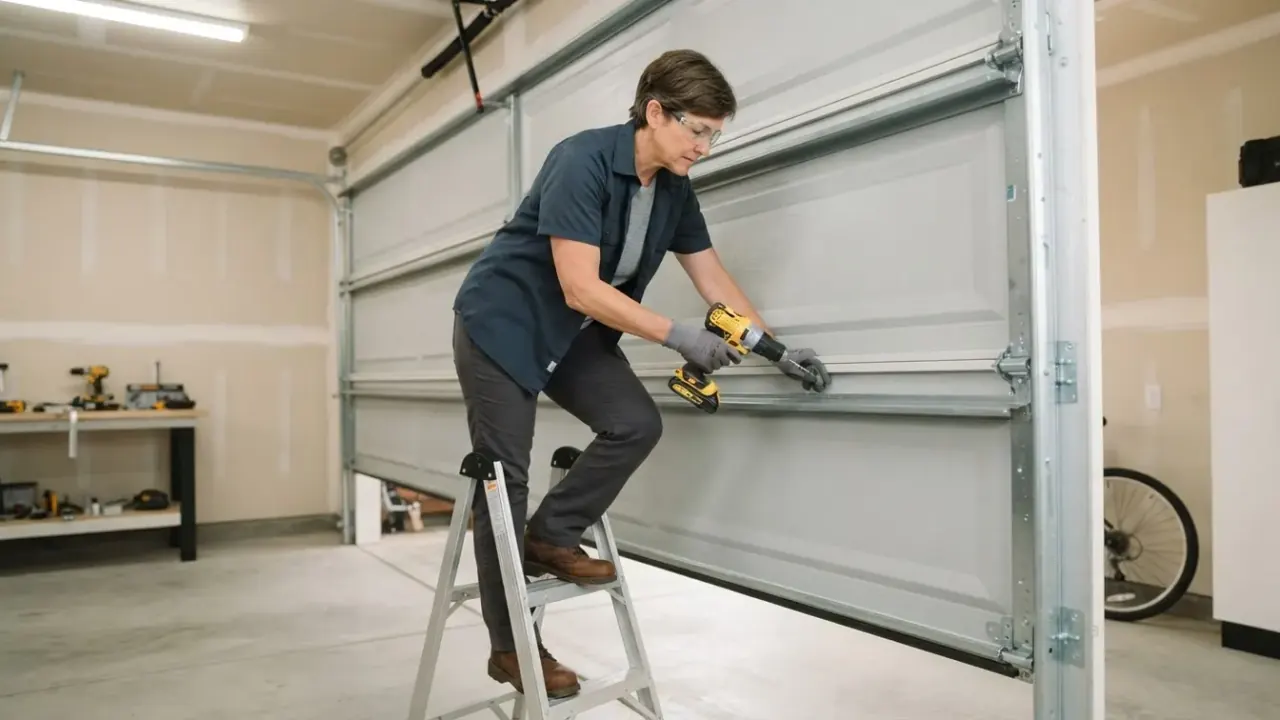
Garage door maintenance is the set of monthly, quarterly and annual checks that keep your door opening smoothly, quietly and safely - and in Tampa it also means protecting the door from salt air, humidity and storm-season wind. If you do nothing else, lubricate the rollers and hinges once a month, test the safety sensors every month, and have a professional inspect the springs and balance once a year. That routine costs you about 15 minutes a month and roughly $150 to $250 for the annual professional visit in 2026, and it's the difference between a door that lasts 12 to 15 years and one that starts throwing parts at you in year six.
Below is the exact checklist we run on doors across Hillsborough County, broken into monthly, quarterly and annual tasks, followed by the local factors that make Tampa different from most of the country.
What a Tampa garage door maintenance checklist actually covers
A garage door maintenance checklist for Tampa covers seven systems: the springs, the cables, the rollers, the hinges, the tracks, the opener and the safety sensors. Each one fails on its own schedule, and each one gives you warning signs weeks before it quits.
The reason a checklist matters more here than in, say, Denver or Minneapolis is the climate. Your door cycles roughly 1,500 times a year, and every one of those cycles puts load on the torsion springs. Add 80% average humidity, salt in the air within a few miles of the bay, and 100-degree summer afternoons, and the metal parts on your door age faster than the same parts in a dry climate.
We see the results every week when homeowners call us for garage door repair in Tampa - a door that was fine in March is grinding in July, and the owner has no idea why. Usually it's one of three things: a dry roller, a spring that's lost tension, or a track that's been knocked out of alignment by heat expansion.
If you want the short version of the whole article: do the five monthly tasks, do the quarterly spring-and-cable check, and book one professional visit a year. Everything else is detail.
The monthly checklist: 10 minutes, five tasks
Run this on the first weekend of every month. It takes about 10 minutes and catches 80% of the problems that would otherwise become emergency calls.
1. Lubricate the rollers, hinges and springs
Use a white lithium grease or a silicone-based garage door lubricant - not WD-40, which is a solvent and will actually strip the factory lubricant out of your rollers. Spray each roller bearing, each hinge pivot, and the torsion spring coils. Wipe off the excess with a rag so it doesn't attract Tampa's airborne dust.
If your door is louder than it was last month, that's your first signal. A well-lubricated door runs at roughly 60 to 65 decibels from inside the garage. A dry one runs 75 to 85. You can hear the difference from the kitchen.
2. Test the safety sensors
Press the wall button to start the door closing, then wave a broom handle or a piece of cardboard through the beam about 6 inches off the floor. The door should reverse within 2 seconds. If it doesn't, the sensors are either misaligned, dirty or dead.
Wipe the sensor lenses with a dry cloth - Tampa's pollen season coats them in a fine yellow film every spring, and that alone is enough to break the beam. If the door still won't reverse, call us for garage door sensor repair in Tampa rather than adjusting them yourself. A misaligned sensor that "looks fine" is the number one cause of doors that close on cars.
3. Check the auto-reverse on the opener
Lay a 2x4 flat on the ground under the middle of the door and press the wall button to close. The door should hit the board and reverse within 2 seconds. This is a separate safety system from the sensors, and it's the one that fails silently.
4. Look at the springs
Stand at the side of the door and look at the torsion spring above the door (or the two extension springs running along the horizontal tracks, if you have an older door). You're looking for a visible gap in the coil - that's a broken spring. You're also looking for rust. Tampa's salt air rusts springs from the outside in, and a rusty spring is a spring that's about to break.
5. Listen
Stand in the garage and cycle the door once. You should hear a steady, low hum. Grinding, popping, squealing or a door that jerks as it moves all point to specific parts - and each one is cheaper to fix now than after it fails.
The quarterly checklist: springs, cables and rollers
Every three months, add these four checks. They take about 20 minutes and they're the ones that catch the expensive failures.
Inspect the cables
The cables run from the bottom corners of the door up to the drums above the tracks. Look for fraying, kinks, or rust. A cable with even one broken strand needs to be replaced - it's carrying the full weight of a 150 to 250 pound door, and when it snaps, the door drops.
If you see fraying, stop using the door and call us. We handle garage door cable repair in Tampa same-day, and it's a job that should never be a DIY project - the tension on those cables will take a finger off.
Check the rollers
Rollers are the small wheels that ride inside the track. Nylon rollers last 7 to 10 years; steel rollers last 4 to 6 in Tampa's humidity. Spin each one by hand. It should turn freely with no wobble. A roller that's flat-spotted, cracked or seized will make the door jump and will wear the track.
Tighten the hinge bolts
Every hinge on the door has two or three bolts, and every one of them loosens over a year of cycles. Go around with a socket wrench and snug them up. Don't over-torque - you'll strip the metal. Loose hinges are the most common cause of a door that rattles in the wind.
Wipe down the tracks
Use a damp rag to wipe the inside of the vertical and horizontal tracks. Do not lubricate the tracks - grease in the track collects grit and turns into a grinding paste. If you find dents or bends in the track, that's a job for garage door track repair in Tampa, not a hammer.
The annual checklist: balance, alignment and weather seals
Once a year - ideally in October or November, before storm season wraps and before the holidays - do a full balance test and a weather-seal inspection. This is also the visit where a professional should look at the springs.
Balance test
Pull the emergency release cord to disconnect the opener, then lift the door by hand to about waist height and let go. A properly balanced door stays where you put it. If it slides down, the springs have lost tension. If it flies up, they're over-tensioned. Either way, it's a spring adjustment, and adjusting torsion springs without the right winding bars is how people end up in the ER.
Weather seals and bottom rubber
Check the rubber seal along the bottom of the door and the weatherstripping around the frame. In Tampa, UV light destroys that rubber in 3 to 5 years. A cracked seal lets in rain during summer storms, and it also lets in palmetto bugs and rats. Replacing a bottom seal is a $30 part and a 20-minute job - one of the cheapest things on this whole list.
Opener force and travel limits
Your opener has two settings that drift over time: the force setting (how hard it pushes) and the travel limit (how far it goes). If the door doesn't quite close, or reverses for no reason, those settings are usually the culprit. Most modern openers have adjustment screws on the back of the motor housing. If you're not comfortable with it, we handle garage door opener repair in Tampa and can reset both in a single visit.
Professional spring inspection
Have a technician measure the spring tension and check the drums, bearings and center bracket. This is the one part of the annual checklist you should not do yourself. A torsion spring under load stores enough energy to break a wrist, and the tools to wind one safely cost more than the service call.
If you want the whole annual visit done in one trip, our garage door maintenance in Tampa service covers lubrication, balance, spring measurement, sensor testing, track alignment and a written report on anything that's close to failing.
How Tampa's humidity, salt air and storm season change the schedule
Tampa's climate compresses the maintenance calendar. A door in Phoenix might go two years between spring replacements. A door in Tampa, especially west of Dale Mabry and anywhere near the bay, often needs new springs in 5 to 7 years instead of the national average of 7 to 10.
Three local factors drive that:
- Salt air. If you're in South Tampa, Westshore, Davis Islands or anywhere within a few miles of the bay, your springs and cables rust from the outside. Wipe them down and lubricate them more often - every three weeks instead of every month.
- Humidity. Tampa averages around 74% relative humidity. That moisture gets into the roller bearings and the opener's internal gears. Silicone-based lubricants hold up better here than petroleum-based ones.
- Storm season. June through November is hurricane season. Before any named storm, close and lock the door, disconnect the opener if you're evacuating, and check that the tracks are firmly bolted to the framing. A garage door that comes off its tracks in 100 mph wind is a projectile.
If your home is in one of the older neighborhoods - Seminole Heights, Hyde Park, Palma Ceia - you're also dealing with doors that were installed decades ago on framing that's settled. Those doors need track alignment checked more often, because the frame moves and the track doesn't.
What to watch out for: mistakes that turn a $150 tune-up into a $900 repair
Most of the expensive garage door repairs we do in Tampa started as a $20 part that the homeowner ignored, or a DIY fix that made things worse. Here are the ones we see most.
- Greasing the tracks. The track is a guide, not a bearing. Grease in the track collects grit and grinds the rollers flat. Lubricate the rollers, not the track.
- Using WD-40 as a lubricant. It's a water displacer, not a grease. It evaporates within days and leaves the part drier than before.
- Adjusting torsion springs yourself. This is the single most dangerous DIY job on a house. We've seen broken wrists, broken fingers and one garage wall that needed structural repair after a spring let go mid-wind.
- Ignoring a broken spring and running the opener anyway. The opener is designed to lift a balanced door. With a broken spring, it's lifting the full 150 to 250 pounds by itself. You'll burn out the motor and the gear assembly - a $600 to $900 repair instead of a $200 spring replacement.
- Painting over a rusted spring. Paint hides the rust but doesn't stop it. The spring still breaks, just later and with less warning.
- Replacing one spring when both are the same age. If one spring broke at year eight, the other one is going to break within a few months. Replace them as a pair.
When to call a professional
Call a professional the moment you see a broken spring, a frayed cable, a door that's off its track, or a door that reverses for no reason. Those four are not maintenance items - they're safety failures, and every day you run the door makes them worse.
Call us sooner if you notice any of these:
- The door opens unevenly, with one side lagging behind the other.
- You hear a loud bang from the garage - that's usually a spring breaking.
- The door won't stay open when you lift it by hand.
- The opener strains, hums without moving, or blows a breaker.
- The door has visible dents or bent panels from a car or a storm.
At garage door repairs Tampa Fl, we handle everything on this checklist - from a $99 tune-up to a full spring and cable replacement - and we'll tell you honestly if a repair isn't worth doing. If you're not sure whether something is a maintenance issue or a repair, send us a photo and we'll tell you what we're looking at.
Frequently Asked Questions
How often should a garage door be serviced in Tampa?
Once a year for a professional service, plus monthly lubrication and sensor tests you do yourself. Because of Tampa's humidity and salt air, doors within a few miles of the bay often benefit from a professional visit every 9 to 10 months instead of 12.
How long do garage door springs last in Florida?
Five to seven years in Tampa, versus seven to ten years nationally. The shorter life comes from salt air, humidity and the roughly 1,500 cycles a typical household puts on the door each year. Springs rated for 20,000 cycles are worth the extra $30 to $50.
Can I lubricate my own garage door?
Yes - and you should, monthly. Use a white lithium or silicone-based garage door lubricant on the rollers, hinges and spring coils. Never use WD-40, and never put lubricant on the tracks themselves. The whole job takes about 10 minutes.
What does garage door maintenance cost in Tampa in 2026?
A standard tune-up runs $99 to $150. A full maintenance visit with spring measurement and balance adjustment runs $150 to $250. Spring replacement, if needed, adds $200 to $350 for the pair, installed.
What should I do to my garage door before a hurricane?
Close and lock the door, disconnect the opener if you're evacuating, and visually check that the tracks are bolted tight to the framing. If your door is more than 15 years old or has ever been off its track, have it inspected before June - that's when storm season starts.
Get help with garage door repair in Tampa
If your door is grinding, jerking, reversing, or just louder than it used to be, we can look at it this week. Our team covers Tampa, South Tampa, Westshore, Seminole Heights, Hyde Park and the surrounding Hillsborough County neighborhoods.
Call +17739156384 to book a maintenance visit or a repair, and we'll give you a straight price before we start.